
Finding Freedom – where?

In Professor James D.G. Dunn’s big “pumpkin” book (The Theology of Paul the Apostle), which is what Jimmy called it himself, five pages are devoted to the “in Christ” or “in the Lord” theme. In Christ appears 83x and in the Lord 47x. After a mandatory sketch of many of these, Dunn concluded that “Paul’s perception of his whole life as a Christian, its source, its identity, and its responsibilities” – all of these are found in the in Christ expression. The expression is not just objective; it is just as subjective. Hence, he can say, that the evidence “makes it hard to avoid talk of something like a mystical sense of the divine presence of Christ within and without, establishing and sustaining the individual in relation to God.” He’s not done. “Likewise we can hardly avoid speaking of the community, a community which understood itself not only from the gospel which had called it into existence, but also from the shared experience of Christ, which bonded them as one.” All this “in Christ/in the Lord.”
In Christ is big. In Christ led to Michael Gorman’s project on participation in Christ. His cruciformity, too, is rooted in “in Christ” theology.

A recent book asks if we tap into who we are, our identity, in Christ enough to know who we are and to experience who we are. Many, of course, say it’s not “who” we are but “whose” we are. That is precisely what John-Paul (JP) Foster and Matt Williams explore in their new book, Finding Freedom in Jesus: The 21 Attributes of Your Identity in Christ, with a foreword by Welton Pleasant.
Foster is the Sr pastor at Faithful Central Bible Church and Williams is a professor of New Testament at Biola University. Matt Williams was one of TA’s back in my TEDS days. He’s been a missionary in Spain and a professor at Biola.
They explore a narrative in this book: who we are “Created in Christ” and then “Restored in Christ” and finally “Confident in Christ.”
Under the first they explore transformed, loved, known, beautiful, image bearer, free, and shame free.
Under the second we find discussions of rescued, forgiven, righteous, redeemed, reconciled, saved, and holy.
Under the third we read about blessed, alive, empowered, victorious, adopted, co-heir, and hopeful.
This book then is a pastoral, therapeutic theology of identity based on the blessings to be found when we settle into knowing who we are “in Christ.”
It’s about being set free. To indwell this liberation of the self in Christ requires more than knowing Paul’s theology. It means practicing the truths. Their book is designed for those who want to work out of their traps and toward that freedom.
A challenge to be faced is negative self-talk – like “I am not enough” or “I will let people down” or “I wish I was different” or “I’m a failure.”
Foster and Williams see a pattern in each of their 21 chapters: a pattern that says “loved people love” and “rescued people rescue.” In academic terms, the indicative spurs an imperative. Or, the truth inspires new life. They propose reading the book either in 21 days or 21 weeks; they propose its use in small groups and they suggest pastors need this book. By the way, Finding Freedom in Jesus has QR codes that takes readers and QR code users to a video testimony about subjects in the chapter.
They believe people can change. That people can grow into this freedom. That is, that people, who often realize how difficult it is to change, can be transformed from who they are into who Christ means them to be. Transformation in the Bible occurs through the gift and power of the Holy Spirit.
Think of the following individuals in the Old Testament and how they changed: Abraham, Sarah, Joseph, Moses, Rahab, David, Elijah.
Then in the New Testament: Mary, Peter, Matthew, Nicodemus, the Samaritan woman, the bleeding woman, Mary Magdalene, thief on the cross, Paul, the Philippian jailor – and they say Jesus was transformed at the transfiguration.
Then, to show each chp works, they say we will be transformed, and we are transformed. “In one sentence, to be transformed means that the Holy Spirit increasingly changes our thoughts and behaviors–in fact, the entirety of who we are–to become more and more like Jesus.”
Each chp concludes with reflective exercises: like breathing, listening to a worship song, thinking about what was learned in each chp, pondering the core idea (“the Holy Spirit increasingly changes our thoughts and behaviors–in fact, the entirety of who we are–to become more and more like Jesus”), thinking about thinking process and our actions, and then spending some time meditating on some selected Bible verses.
The importance of “in Christ/in the Lord” in Paul’s theology is undeniable. The pastoral and therapeutic significance of the theme is just as undeniable. The book makes me think back to my college days when I read a devotional book, which was very helpful to me, by the Plymouth Brethren C.H. Mackintosh called The All-Sufficiency of Christ. That book and this new book by Foster and Williams link themselves to the great “in Christ” theme in Paul and to the potential personal freedom for all who embrace that theme from the inside-out.
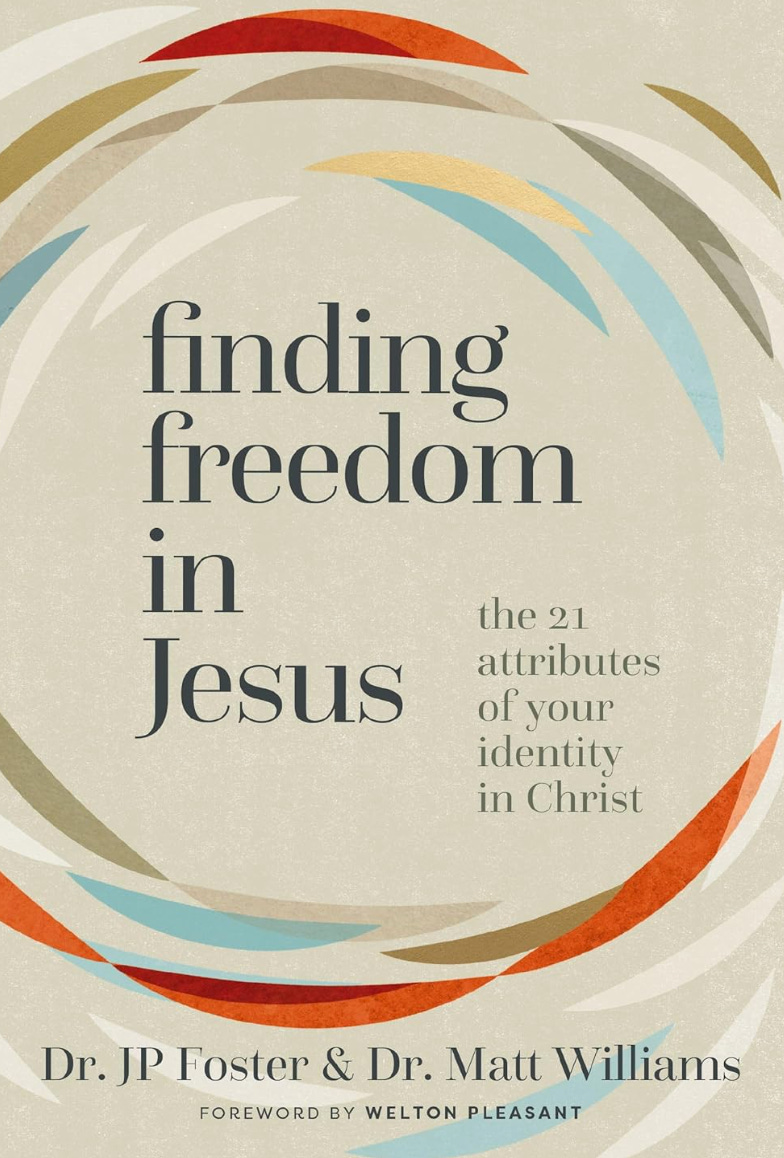
Thank you Scott for sharing these books.