
Rereading Revelation with ...

One of my favorite writers on Revelation and all things eschatology is Greg Carey, who is a professor of NT at Lancaster Theological Seminary and Moravian Theological Seminary (in Pennsylvania for those who don’t know those schools). I’m not patronizing when I say I learn from him though we differ. There is a transparency and honesty about Carey in his writings, not least in in his insights over the last decade in what Trump was up to. Greg now appears to me to be deadly accurate in what he was seeing a decade ago. Whether or not he got his perceptions from the Bible – the prophets, Jesus, the Revelation – or not matters me not. What matters is that his perspective politically has been shrewd, bold, and potent.
His approach to Revelation derives from his Christian heritage, from the steps he has taken down the path of progressive Protestantism, and leads into a viewpoint that affirms the heart of the Christian tradition for how to live today and how to read the Bible, even if it means using that viewpoint to point out failures. Revelation, in other words, stimulates him into thinking about politics in our day.
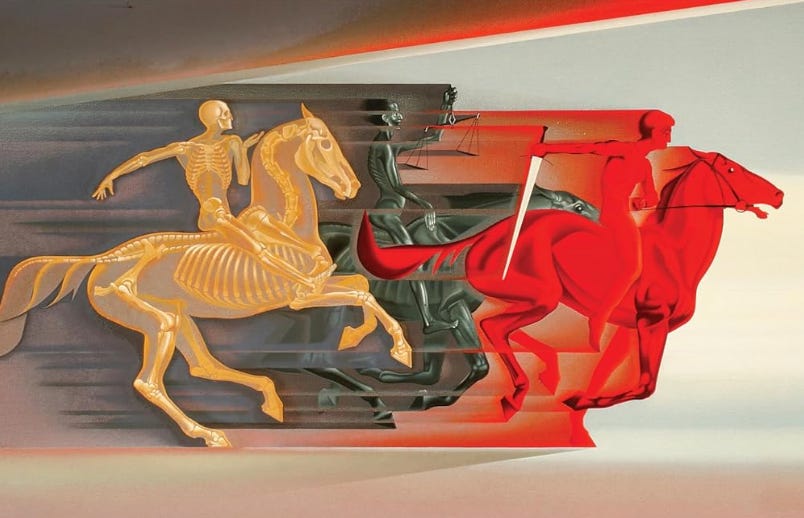
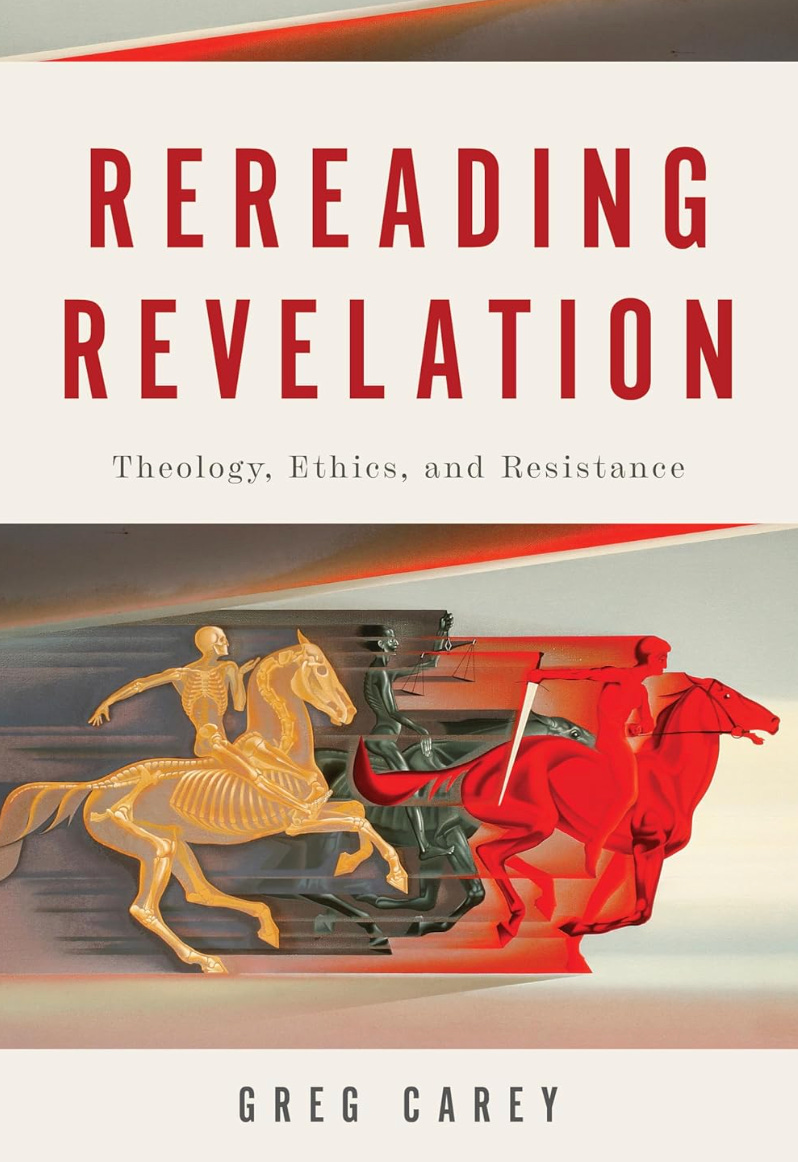
Which is why his new book on Revelation, called Rereading Revelation: Theology, Politics, and Resistance, is one I am highlighting on this Substack. I have learned much about dissidence and resistance from Revelation. Carey, too, finds resistance in Revelation. His resistance is not a “the Bible says it, I believe it, so resist” but a moral grounding in justice and peace that perceives help and critique in the Book of Revelation. To whet your appetite for his book and his series, I quote him now, and his hermeneutic will be obvious and one I believe needs to be engaged:
“I now regard Revelation as a dangerous and necessary part of the New Testament canon. I will not try to explain away aspects of Revelation that lead many readers to reject it outright. Revelation relishes the hope that its enemies will suffer. To the degree that it resists Roman imperialism, it nevertheless presents Jesus as ruler of a new empire and his followers as rulers in their own right. Although Revelation does not promote violence on the part of its reader/hearers, many have read its violent imagery as legitimating violence. They may misread Revelation in these ways, but several passages celebrate when the Lamb’s enemies suffer. Revelation is irredeemably misogynist; it cannot imagine female identity in categories other than sexual ones and envisions only female characters as undergoing sexualized punishment. I would add that Revelation addresses its audience with an absolutist and authoritarian voice. I do not try to make these things okay.
Readers reject Revelation for other reasons that I do not share. Many regard it as hopefully esoteric and impossible to understand. Revelation is that at many points, but we can get the general drift by reading it within the poetic and rhetorical conventions of ancient apocalyptic literature. Lots of readers also regard Revelation as an empty form of pie in the sky escapism completely untethered from the demands of real life. Here I disagree fiercely: Revelation is very much concerned with faithful witness to Jesus in its own time and place. Moreover, its hope is grounded in Israel's Scriptures and in the resurrection of Jesus. I believe a close examination of hope is relevant and worthwhile. Similar to the pie in the sky objection is the argument that Revelation imagines the destruction of our world, a dangerous notion in a world that faces dire ecological and technological threats. I think a case can be made that Revelation imagines a new age, even one that renews our world. Many also reject Revelation because of its exclusivity: one follows the Lamb or faces unbearable suffering. This objection strikes home, but I believe it is possible to read revelation more optimistically. Finally, some readers push revelation aside because John is an extremist who brooks no compromise. Again, this concern is well founded, but it requires further reflection. Many of our heroes were extremists in their day.
In this book, I address all these issues presented in the previous two paragraphs. Some received more attention than others. In this book, I want to name why Revelation is essential reading for Christians despite its flaws, the challenging questions that come with it, and the difficulty of understanding it. Revelation confronts contemporary readers with pressing questions more directly than does any other New Testament document. Many of these questions feel particularly relevant.
Revelation’s primary challenge involves loyalty. John composed Revelation to call worshippers of Jesus to resist imperial culture, specifically worship devoted to the emperors and the imperial gods. The primary category is not some abstract Protestant “faith” but “faithfulness” as a matter of relationship, allegiance, and conduct. … This language foregrounds absolute loyalty when loyalty can be costly.
More than any other New Testament document, Revelation presses contemporary Christians to ask how our social and commercial entanglements may compromise our loyalty to Jesus Christ.
Revelation is an example of counter-imperial resistance literature.”
This will be a delight to read, and I hope you buy Greg’s book and read it – with others.
Thank you, Scott! It’s nice to read a “Greg” who thinks along the lines of this Greg! If it walks. talks, and quacks like imperialism, it’s not where I place my faith. If it says it’s not imperialism, or that it’s a good imperialism, but nods, winks, and doesn’t share the Living Hope Jesus brought and shared, then I don’t believe a word of that imperialistic snake oil! Goodness to all!
Thank you Scott , sounds like a good book to be read.