
Teaching the New Testament Today

In the span of my career as a professor textbooks have multiplied. Even if adjusting to a new textbook for a curriculum class can be difficult, if not tedious, the new textbooks are getting better and better. When I was a college and seminary student the standard NT introduction text for evangelicals, and by “introduction” we are talking about dates and authorship and critical discussions, was Donald Guthrie’s big book. During those same college years (say junior or senior) Ralph Martin’s New Testament Foundations appeared and I devoured it and became for me the best book introducing the issues. It’s of course now seriously outdated.
So today’s NT professors either grow stale with their oldie but goodie textbook or they adjust to the best new introduction. I would guess I’ve seen a dozen or more NT introductions appear since my student days. In English.
The newest one is by Joel B. Green, Marianne Meye Thompson, and David J. Downs. The title is not subtle: Introducing the New Testament: It’s Literature and Theology, 2d edition. Yes, the one by N.T. Wright and Mike Bird is also valuable, as is the one by Mark Allan Powell and many today use Bart Ehrman’s textbook.
Back to Green-Thompson-Downs, which is the 2d edition of the one previously published by Achtemeier-Green-Thompson. This new one is fantastic. It’s updated and brings in the best new scholarship. The three scholars (Green, Thompson, Downs) are at the top of their game, and the first two have a career of teaching and writing. Downs is a younger scholar who brings a fresh new vigor to the volume.
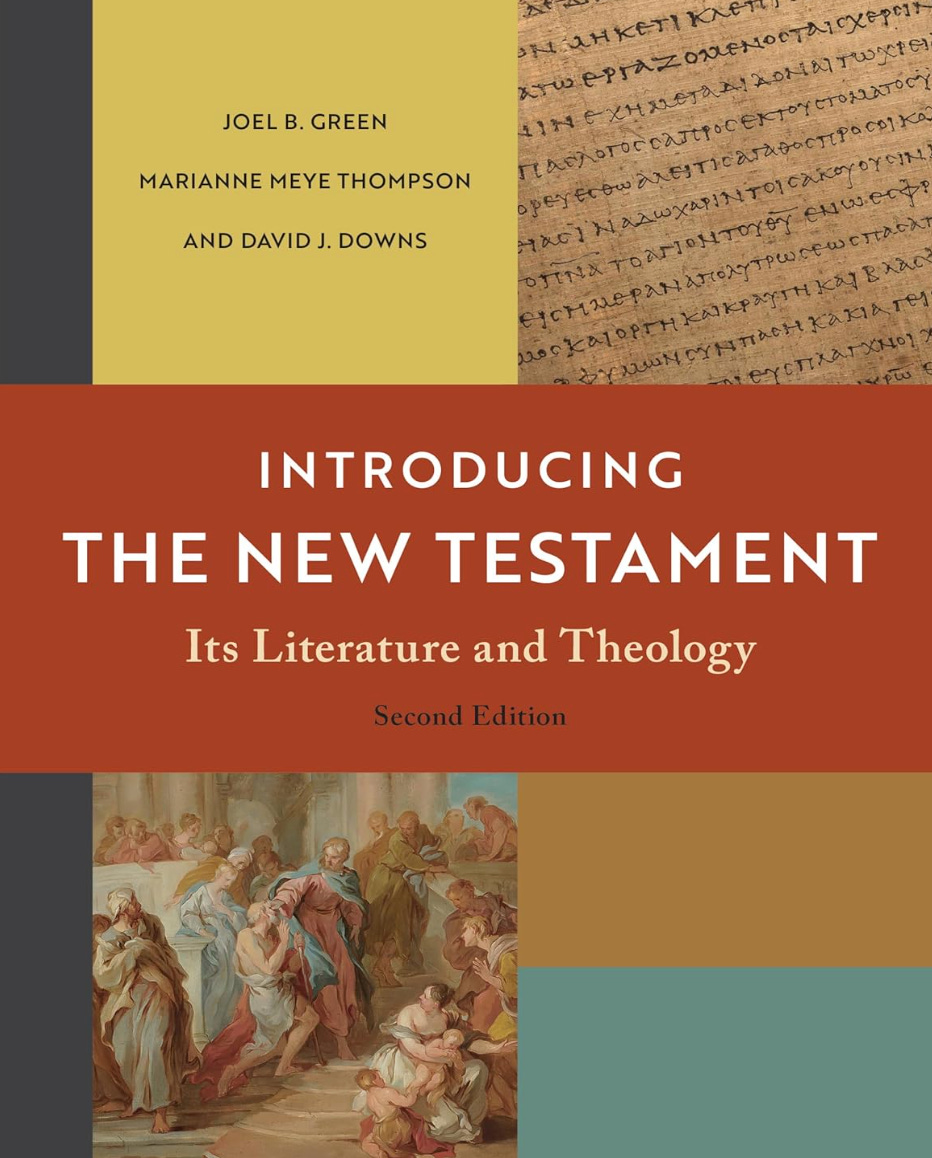
The chapters: What is the NT? The world of the NT. The nature of the Gospels. Then Matthew, Mark, Luke, John. Then a chp on Jesus. Acts. Letters. Paul’s Life and Mission. Romans through Timothy and Titus. Then Hebrews. James. 1-2 Peter and Jude. 1-3 John. Revelation. With a concluding chp on the formation of the NT canon.
The book is softcover, reducing the price, and filled with excellent graphs, maps, and pictures, making it even more valuable for students. I’m committed to having no more than two NT introductions on my shelves, so an older one has to go because this new one will be my go-to NT Introduction.
There is another element in introducing the NT to students. Alongside going through the standard questions the student must face (date, authorship), we students need to learn the methods of study. The question here becomes “How do we read the NT well?”
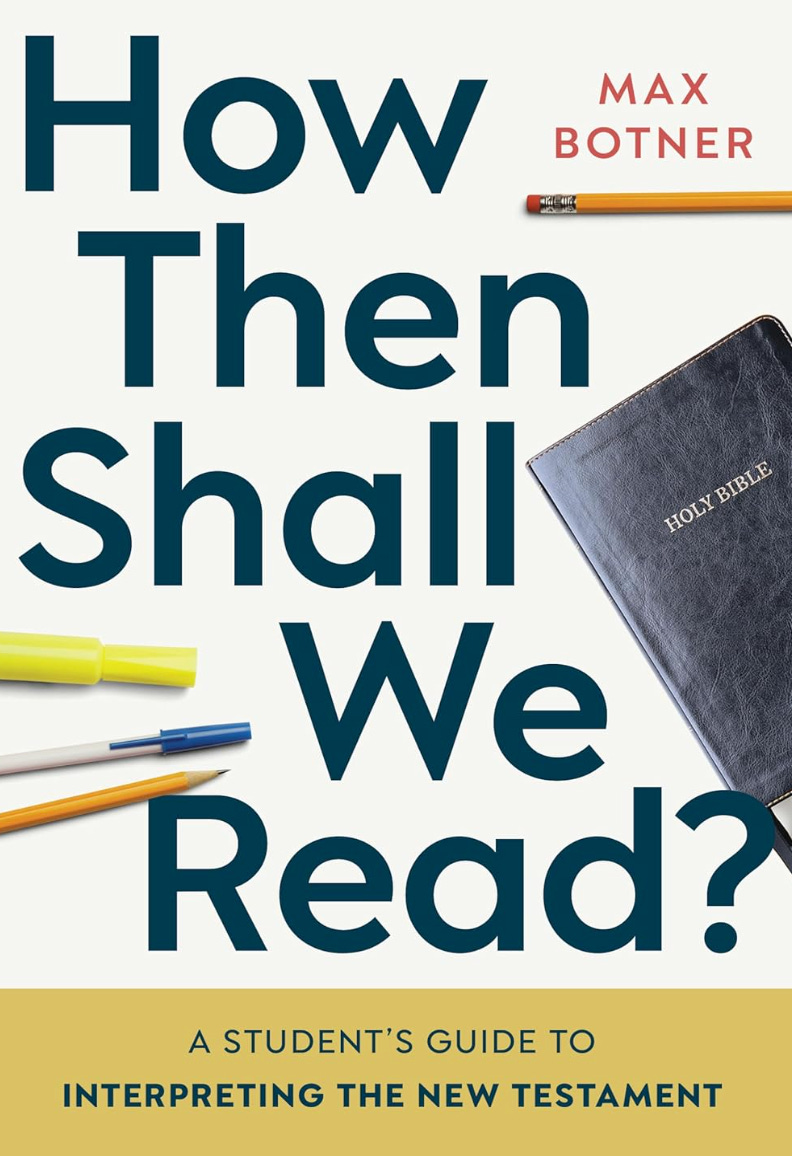
Another really good book just appeared, and I really like what it does. The book is by Max Botner and the book is called How Then Shall We Read? A Student’s Guide to Interpreting the New Testament. When both of these books landed on my front porch I wondered what this smaller book would be doing. Not another NT intro, a short one, is it? No, it’s not another NT intro. It’s something different, and something good, and needs to accompany Green-Thompson-Downs.
The question the student faces as one learns the facts and theories in NT Introduction is about what matters most for the actual reading of the NT, which will be a lifelong practice of most of those who take seminary or college courses in the NT. Botner digs into seven factors that matter, and he’s right-on about these:
Interpretation matters
Theology matters
History matters
Literature matters
Language matters
Canonical conversations matter
Catholic conversations matter
I like the diversity of his bibliographic suggestions; I like his selection of topics, though I’d like a chp on “Judaism matters.” He’s got some of this in his History matters chp. His chp on “Catholic conversations” takes that word “catholic” and fills in the diversity of NT interpreters and methods. These two books are two doors that open into the library of biblical studies. They will even open the door for you. Welcome.
If I were teaching introductory courses, I’d use both of these books. Ugh, it would mean adjusting syllabus and lectures. Professors who don’t do that go stale in a decade.
Great post, Scot! Since I retired(almosta year ago, now) when I read the Bible, I have finally, totally remove the burden of what my superiors or parishioners want to hear. In a Lextio Divina sort of way, I ask " What is this saying to ME. And to the people Ichangout with everyweek?" And greatly influenced by your Jesus Creed book(s), and The Church of ToV, by you and your daughter, I ask how does whatever passagecI'm reading/studying reflect Jesus' Creed and Tov? If it doesn't I move on. When someone tries to place a "big BUT"(Pardon the possible dual meaning truth) in my way, I restatexwhatxlense I'm looking through, becausecI've ye to meet someone who wasc"there" to give me an eye witness report. So I trust Jesus' carried down wordscwith my big picture view of thosexwords as The Bile that matters most to how we live and converse in Today's world. The book's you have highlighted sound like they would satisfy my hunger and thirst today. Thank you! Obviously my presence here has declined, while my word count hasn't. May God's Spirit continue to find open hearts and lives in all! presence here has also changed for me.
THANK YOU, Scot for these recommendations!