
We Need More (Real) Baptists

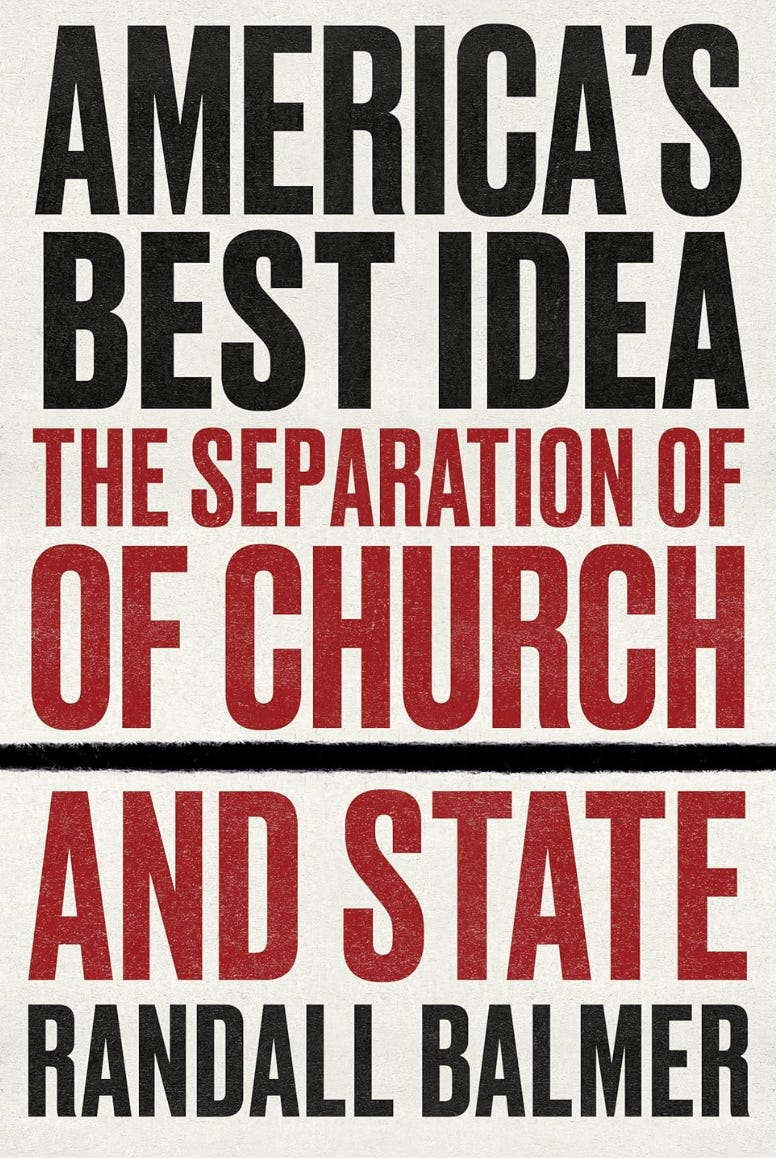
Randall Balmer is the son of an Evangelical Free Church pastor, which makes his father baptistic. Balmer himself is now an Episcopalian priest. For this Substack, Balmer is an American historian. We are nearing the completion of his wonderful new book, America’s Best Idea: The Separation of Church and State.
The thesis of his fourteenth chapter is that “American needs more Baptists. Real, traditional Baptists.” By “real” he means Baptists like Isaac Backus (Google him) and George Washington Truett, who was pastor at 1st Baptist in Dallas, and not like, well, Roy Moore and W.A. Criswell (and he doesn’t dabble in names here other than these two; you can add your own).
So today some discussion of what a “real” Baptist is in our political situation. We are struggling with the First Amendment. Daily. Hourly. Tweet by tweet. Many Baptists are not helping.
Backus, for instance, proposed that the Massachusetts Constitution include these words: “Every person has an inalienable right to act in all religious affairs according to the full persuasion of his own mind, where others are not injured thereby.”
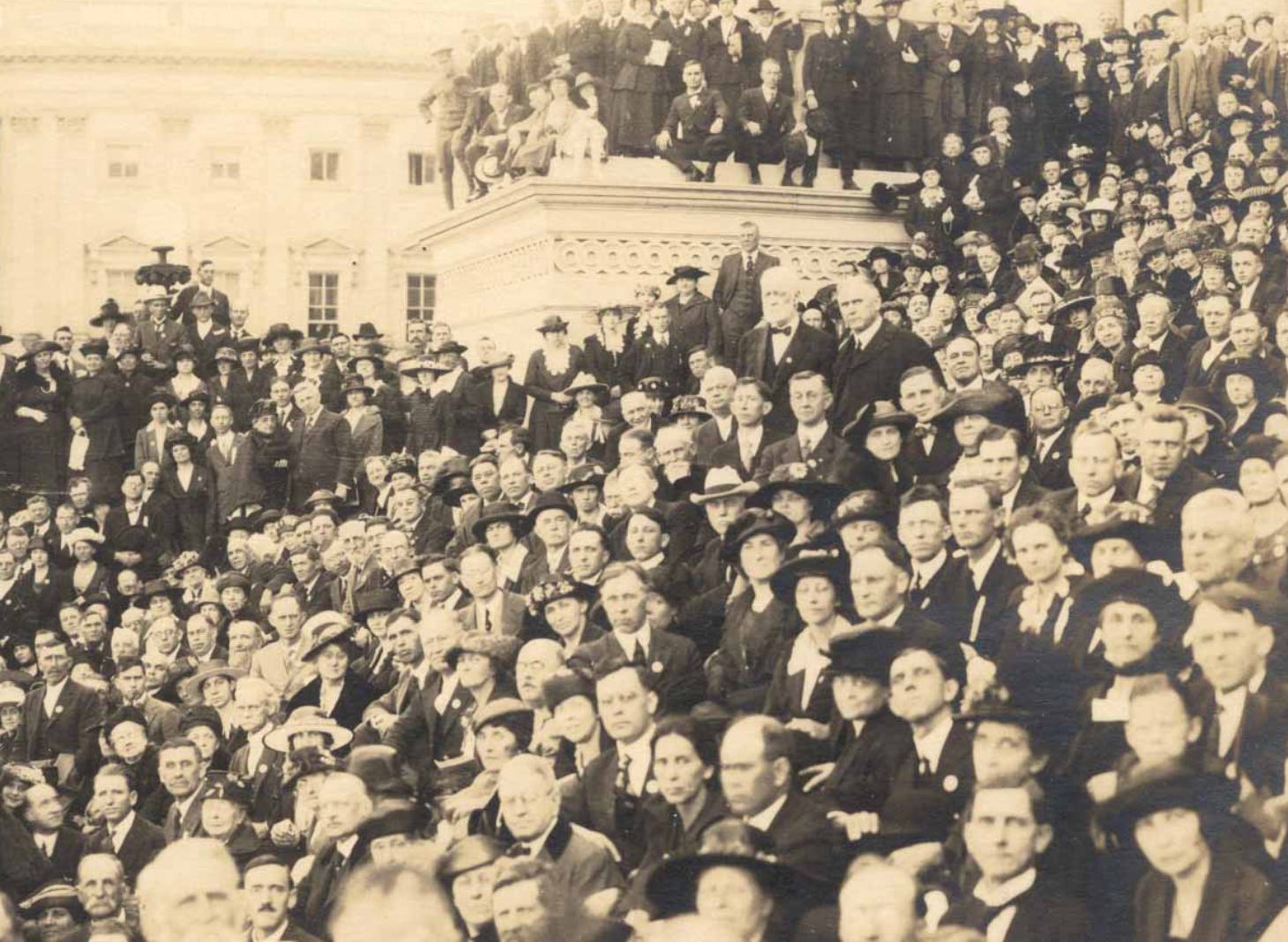
Truett, at a lectern on the east steps of the US Capitol (image above), addressing a crowd of 10-15,000, declared that “The supreme contribution of the new world to the old is the contribution of religious liberty.” And, that “the chiefest contribution that America has thus far made to civilization was preeminently a Baptist achievement.”
Which was what? “The natural and fundamental and indefeasible right of every human being to worship God or not, according to the dictates of his conscience, and, as long as he does not infringe upon the rights of others, he is to be held accountable alone to God for all religious beliefs and practices.”
Which is more than toleration. “Toleration is a concession, while liberty is a right.”
The real Baptist contribution, then, is “soul liberty/freedom.” “God wants free worshipers and no other kind.” Which means a real Baptist will defend the religious freedom of Jews and Catholics and Muslims and Mormons and Presbyterians. Again, Truett: “Christ’s religion needs no prop of any kind from any worldly source, and to the degree that it is thus supported is a millstone hanged about its neck.” By Truett has in mind Constitutional support, imposition, and coercion.
A noticeable feature of real Baptists is the rejection of majoritarianism, which is the idea that the faith of the majority or the ideology of the majority ought to be constitutional or established.
Balmer’s rhetorical turn is not subtle. “Their [the real Baptists’] putative descendants, however, seek to impose their religious views on all Americans, thereby violating not only the First Amendment but the very principles that define their own religious heritage.” Real Baptists adhere to (1) “Liberty of conscience, (2) separation of church and state, (3) respect for the rights of minorities.”
Baptists did so until 1979. For those of us who don’t know the history of American religion, he is referring to the Southern Baptist Convention of 1979, when its role as the “watchman of the wall of separation” was abandoned. Majoritarian voices began to shout down soul liberty. These majoritarian voices were concerned with both theology and politics.
WA Criswell turned around 180 degrees. When JFK ran for president, Criswell opined that the “Church and state must be, in this nation, forever separate and free” and that “there can be no proper union of church and state.” In the Reagan years Criswell turned around to say “this notion of the separation of church and state was the figment some infidel’s imagination.”
When the wall is knocked down and when majoritarianism rules the day, it is the church that is most influenced and will fade away.
Balmer tells the story of Roy Moore who famously brought the ten commandments into his courtroom in Alabama and then had a funeral company make a monument outside the court house. Balmer was an expert witness in that case, and he declared a theme he has often stated: “The First Amendment and the separation of church and state was the best thing that ever happened to religion in the United States.”
Many in Trump’s cabinet and many of his supporters do not believe this, and neither do they understand or protect the First Amendment.
Thank you Scott for sharing this book , I have been enjoying reading ( listening) it.