
Women Elders?

By Sandra Glahn, with her permission
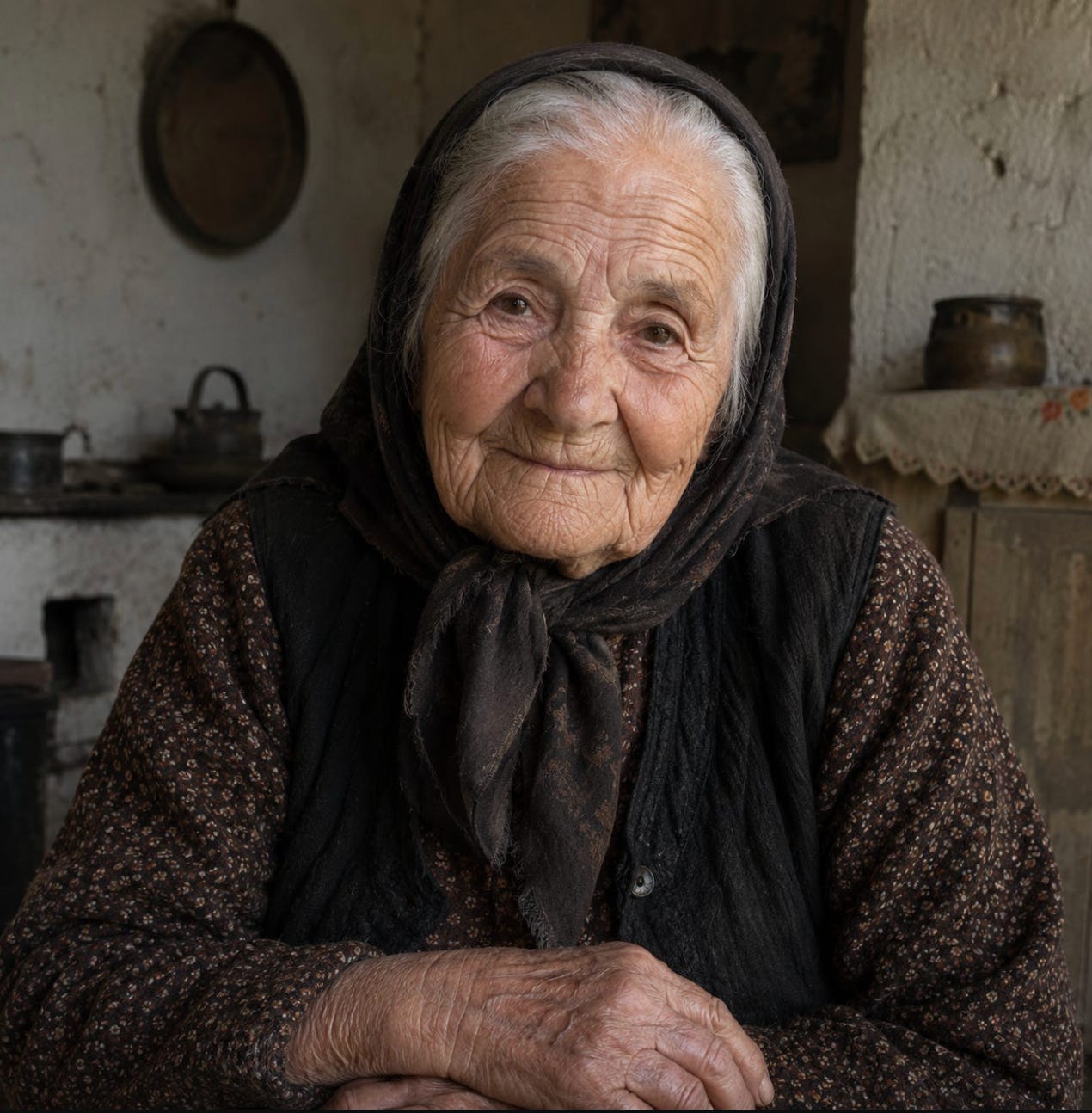
Image from Sandra Glahn’s generated by AI
Sometimes people ask me, “Were women elders at the time of the earliest Christians?” If they mean like a village elder, sure. They did it all the time. If they mean “elder” as an office in the church rooted in the Pastoral epistles, the answer gets way more complicated.
Let me begin by saying we could benefit from some consistency in translation here. In the Greek New Testament πρεσβύτερος (presbyteros) means literally “older man” or “elder.” Think of a guy with gray hair and the experience and wisdom that can come with physical maturity. The word presbyteros appears multiple times across the New Testament (NT). Here are the main categories and representative passages:
Jewish community elders
Matthew 15:2 – “Why do your disciples disobey the tradition of the elders? For they don’t wash their hands when they eat.”
Matthew 16:21 – “From that time on Jesus began to show his disciples that he must go to Jerusalem and suffer many things from the elders, chief priests, and experts in the law, and be killed, and on the third day be raised.”
Matthew 26:3 – “Then the chief priests and the elders of the people met together in the palace of the high priest, who was named Caiaphas,”
Mark 7:3 – “(For the Pharisees and all the Jews do not eat unless they wash their hands ceremonially, holding to the tradition of the elders.)”
Luke 22:52 – “Then Jesus said to the chief priests of the temple police and the elders who had come for him, ‘Have you come out with swords and clubs like you would against an outlaw?’”
Acts 4:5 – “On the next day their rulers, elders, and experts in the law came together in Jerusalem,”
Local church leaders
Acts 11:30 – “They did so, sending their financial aid to the elders by Barnabas and Saul.”
Acts 14:23 – “When they had appointed elders in the various churches, with prayer and fasting they entrusted them to the protection of the Lord in whom they had believed.”
Acts 15:2, 4, 6, 22–23 – “When Paul and Barnabas had a major argument and debate with them, the church appointed Paul and Barnabas and some others to go up to Jerusalem to meet with the apostles and elders about this issue.”
15:4 – “When they arrived in Jerusalem, they were received by the church, the apostles, and the elders, and they reported all the things God had done through them.”
15:6 – “The apostles and the elders met together to deliberate about this matter.”
15:22–23 – “Then the apostles and elders, with the whole church, decided to send men chosen from among them to Antioch with Paul and Barnabas… The apostles and elders, your brothers, greet the Gentile believers in Antioch, Syria, and Cilicia.”
Acts 20:17 – “From Miletus he sent a message to Ephesus, telling the elders of the church to come to him.”
1 Timothy 5:17 – “Elders who provide effective leadership must be counted worthy of double honor, especially those who work hard in speaking and teaching.”
Titus 1:5 – “The reason I left you in Crete was to set in order the remaining matters and to appoint elders in every town, as I directed you.”
James 5:14 – “Is anyone among you ill? He should summon the elders of the church, and they should pray for him and anoint him with oil in the name of the Lord.”
1 Peter 5:1, 5 – “So as your fellow elder and witness of Christ’s sufferings… I exhort the elders among you…”
5:5 “In the same way, you younger men, be subject to the elders. And all of you, clothe yourselves with humility toward one another.”
2 John 1 – “From the elder, to an elect lady and her children, whom I love in truth—and not I only, but also all who know the truth—”
3 John 1 – “From the elder, to Gaius my dear brother, whom I love in truth.”
The heavenly elders in Revelation (Rev 4:4, 10; 5:5-14; 7:11-13; 11:16; 19:4).
These are the “twenty-four elders” around God’s throne which, interestingly enough, the Ravenna mosaics in the Archbishop’s Chapel (c. AD 500) depict as eighteen men and six women (see Carina Prestes, Excavating Women). But scholars are not even sure they are human. I think they are—as a nod to the twelve Jewish disciples building on the twelve tribes of Israel. Nevertheless, I find it interesting that churches more than a thousand years ago saw in the twenty-four elders a male/female lineup.
The word “elder” occurs about 66–67 times in the Greek New Testament depending on which textual tradition/counting method we use.
Female parallel?
Is there a linguistic parallel for females? Yes, indeed. But there’s not a clean “office” parallel. The feminine form of the word we’re discussing is πρεσβῦτις (presbytis, “older woman”) which we see in Titus 2:3, where we read that presbytidas (πρεσβύτιδας) are to teach the younger women to be husband-loving, children-loving home-workers—home being where most of the commerce happened (vs. a post-Industrial Revolution picture of a wife/mom at home removed from the world of economics). These women are teaching.
An older woman teaching specific content to younger women is a step closer to a vetted role than “village elder.” But it’s not the same as how we see the men operating. (Let us pause here to note that men teaching wives how to “wife” and moms how to “mother” probably would have struck the apostles as overreach.)
At any rate, linguistically women are called “elders.” But do the biblical writers envision women serving in vetted office in the church? The evidence points to “yes.” But the office is not called “elder.”
I see a parallel in the English for “parents” vs. “moms” and “dads.” On the one hand, asking if a woman can be a presbyteros is like asking if a man can be a mother or if a woman can be a father. Each one (father or mother) gets his (father) or her (mother) own word for “parent,” depending on sex. The plural form of elder, presbyteroi, is like the word for “parent” and can refer to a male-only group or a mixed-gender group, in the same way that amigo and amiga become amigos. We see this in Hebrews 11:2:
“For by it [faith] the elders (οἱ πρεσβύτεροι, hoi presbyteroi) obtained a good testimony.” The presbyteroi the author has in view include Sarah (v. 11) and Rahab (v. 31), women numbered among the ancient exemplars of the faith.
Additionally, while presbyteros is a singular form of the word “elder” that can apply to men who hold church office, there is an office for a woman that comes with qualifications for vetting. But it isn’t the female form of “elder.” Rather, it’s widow. A mother and a father in the church, which is a family, are “elder” and “widow”—old guy and vulnerable adult female. It’s like somebody thought it might be good to pop the bubble of power in words assigned to those holding church office to emphasize that their task is to serve.
What makes it more complicated is that we often talk about qualifications for “elders” when referencing a passage where qualifications are outlined, but the word there is not elder; it’s overseer. Let’s assume they’re synonyms. If so, the qualifications for an overseer include being the husband of one wife (1 Tim 3:2). The qualifications for widow include having been the wife of one husband (5:9). The lists for the two offices have a lot of overlap.
Recommended sources
In the past few years, I’ve received requests for sources that talk about “widow” as an office in the early church. Below is a short bibliography in chronological order by publication date. I recommend reading the books in this order to see the development of the research. But if you can read only one, grab Thurston’s:
Gryson, Roger. The Ministry of Women in the Early Church. Collegeville, MN: Liturgical Press, 1976.
Martimort, A. Georges. Deaconesses: An Historical Study. Translated by K. D. Whitehead. San Francisco: Ignatius Press, 1986.
*Thurston, Bonnie Bowman. The Widows: A Women’s Ministry in the Early Church. Minneapolis: Fortress Press, 1989. 117 pages.
Elm, Susanna. Virgins of God: The Making of Asceticism in Late Antiquity. Oxford, Clarendon Press. 1994. 444 pages.
Eisen, Ute E. Women Officeholders in Early Christianity: Epigraphical and Literary Studies. Translated by Linda Maloney. Collegeville, MN: The Liturgical Press, 2000. 322 pages.
Madigan, Kevin and Carolyn Osiek. Ordained Women in the Early Church: A Documentary History. Baltimore: Johns Hopkins University Press, 2011. 240 pages.
Davies, Stevan L. The Revolt of the Widows: The Social World of the Apocryphal Acts. Dublin, Bardic Press, 2012. 162 pages.
What they say
Thurston builds a case for the grounding of an official order of widows in the New Testament Scriptures (1 Tim 5) before examining the ensuing ministry of widows through the 3rd century. Her consideration of patristic-era documents includes a discussion of the cultural influences behind changes in ecclesial structures. She provides the receipts and concludes that the order of widows was linked to spiritual gifting and reached its height in the 3rd century, especially (but not exclusively) in the Eastern Church.
The order of widows, she says, was ultimately replaced by the rise of the female deacon as the church institutionalized and moved away from gift-based ministry forms to clerical offices. That explains why we don’t find women deacons in the first few centuries. People have argued that—in the absence of historical deaconesses—we should conclude that no women served in church leadership. But maybe that’s because historians saw the word “widow” and read it only as “a woman who lost her husband.”
Additionally, here is the relevant part of the entry from the Theological Dictionary of the NT (TDNT), the 1977 version (I’m going with an older lexicon to show that data about widows as an institution/ office has been around for more than 45 years) about the chḗra or widow. Note that the term is not limited to women who actually lost husbands:
Ministry. “True” widows are selected for service in the church (v. 9). This is implied by the “enrollment” of vv. 9, 11. Qualifications for selection are that they have no family (v. 5), give proof of good works (v. 10), be at least 60 years old (v. 9), have had only one husband (v. 9), and have no desire to remarry (v. 11). Whether the reference to one husband refers to remarriage after the death of a first husband or to remarriage after divorce is debated. Jesus allows the former but not the latter (Mk. 12:24ff.; 10:12). Paul leaves the former open in principle (Rom. 7:2–3). Lk. 2:36–37 extols the widow who has married only once. The tasks of widows include prayer, duties corresponding to those of a wife, and probably the training of younger women as enjoined on the presbýtides in Tit. 2:3ff. Wealthy widows might also have had charge of house churches (cf. Lydia, Mary the mother of Mark, Chloe, and Nympha in Col. 4:15). Relatives are to provide for widows where possible. The church assumes responsibility where there is no one else to do so (1 Tim. 5:16).
D. The Widow in the Early Church.
Widows as an Institution. An institution of widows develops, although whether they are ranked as ordained ministers is debatable.* To be accepted widows must go through a time of testing, must have been married only once, must have led blameless lives and cared well for their families, and must be of a certain (variable) age. When appointed church widows, they take a vow not to remarry and are accountable to God for keeping it. In later orders there are to be only three church widows in a congregation. Some references group them with the bishops, presbyters, and deacons; others not. Ignatius [d. 108] Smyrneans 13:1 mentions “virgins who are called widows,” perhaps because there are not enough real widows. Women deacons, or deaconesses, have some precedence over widows because they have functions of supervision and direction, but they are often selected from among virgins or widows. We thus read of widows who are deaconesses, although even later the two groups are not identical. The tasks of widows include prayer, caring for the sick, visiting prisoners, showing hospitality to traveling preachers, and teaching women catechumens and Christian girls. Because of their work in the church they are highly honored, have a special place at worship on the left behind the presbyters (as deacons are on the right behind the bishop), receive communion after the deacons and before subdeacons, etc. Yet by the end of the early period the order disappears. It perhaps finds a new form in the monastic orders for women, for nuns take up many of the duties that widows originally discharge.
*I’m not sure why the writers considered women’s ordination debatable. Madigan’s work cites these instructions for installing a widow to office from the (4th? or) 5th century document from Syria (or Egypt? Asia Minor?), the Testamentum Domini:
Testamentum Domini 1.41 (Prayer of the Widows Who Sit in Front)
Following are the instructions for the ordination (ordinatio) of a widow and the prayer the bishop says in ordaining her. The ordination of a widow should occur like this: While she is praying at the entrance of the altar and looking downward, let the bishop say quietly (submisse), so that only the priests may hear: Holy and lofty God, who sees humble women, who has chosen the infirm and the powerful, who has created, O honored one, even these who are scorned, impart, O Lord, a spirit of power upon this your servant, and in your truth strengthen her so that, fulfilling your commandment and laboring in your sanctuary, she may be for you an honored vessel and may give glory on the day, O Lord, on which you will glorify your poor ones. Give to her power of happily practicing the teachings prescribed by you in the rule of your handmaiden. Give to her, O Lord, a spirit of humility, of power and patience and kindness, so that she might, bearing your burden with ineffable joy, sustain her labors. Truly, Lord God, who knows our infirmity, perfect your handmaiden for the glory of your house; strengthen her for edification and as a shining example. God, sanctify her, make her wise and comfort her, because, God our Father, your kingdom is blessed and glorious . . .
The people: Amen.
I suspect this whole topic is especially foreign to most Protestants in the West because we don’t have nuns, so it never occurs to us to wonder where nuns came from.
The chronology
Practices varied by region. But by the 2nd–4th centuries, some churches had formal “orders of widows” and also “virgins”—both groups being consecrated, but the latter being younger and never married. That is not to say all “church widows” had been married and lost husbands. The title “widow” related more to age than marital status. We find reference in Tertullian to “the widows who are virgins.”
Church writers like Ignatius of Antioch and John Chrysostom also mention these widows. Such women were respected for their age and faithfulness.
After the rise of monasticism in the 4th century, communities of women living under vows became more organized. The progression went something like this:
Early church widows → one form of recognized female religious life
Consecrated virgins → another form
The two merge → eventually skewing younger, and “widows” are subsumed into “deaconesses”
Nuns inherited some features associated with widows:
celibacy, renunciation of remarriage, or vow to remain single after losing a husband
a prayer-centered life—Polycarp of Smyrna called such widows “the altar of God” (Pol. Phil. 4.3)
charitable service
recognized ecclesial status
Some historians describe this type of consecrated widow as existing in proto-monastic communities before formal convents existed.
Conclusion
The word “elder” has a variety of forms and contextual meanings. And the timeline of “what women did” does not follow a simple, linear or geographical story. But here’s what we do know: the church vetted women who served in vocational ministry. And these “widows” were not at home taking care of their husbands and kids. They were serving the Bride.
Were women elders? Depends on what exactly you are asking. Did women hold office in the church? The evidence said they did. The church is a family and it has both mothers and fathers. Sometimes we organize ourselves like it’s a single-parent family, but the ideal has always been for this family to have brothers, sisters, fathers, and mothers.
For my more academic work on this subject go here.
Irving Bible Church in Irving, Texas, where I attend, has allowed women to preach and recently announced they are allowing women to serve as elders. I was very pleased with the decision.
Thank you Scott.