
On Women Preaching

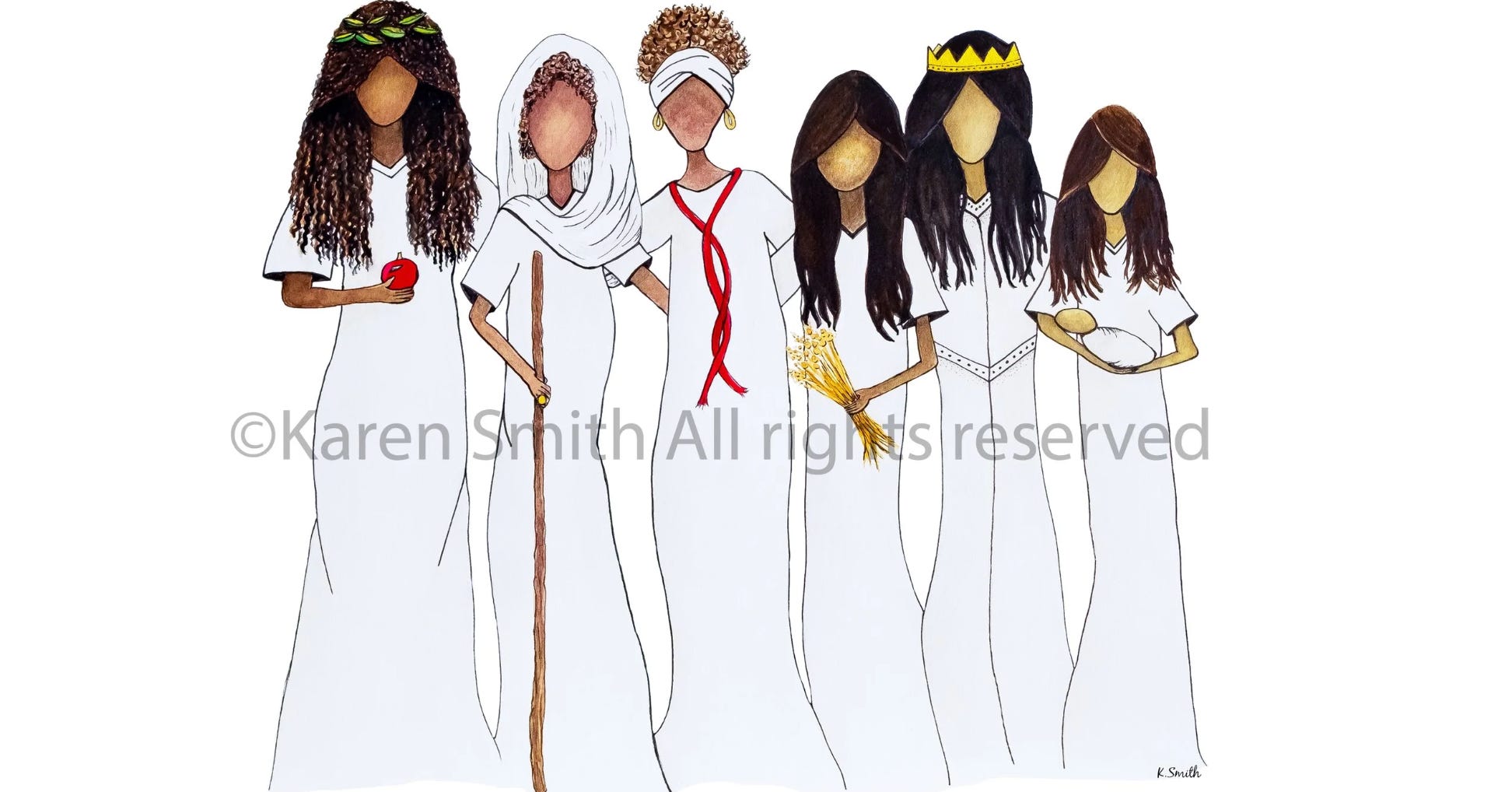
This week I’ve been working on writing two sermons I get to preach coming up at a local church. It’s not lost on me what a privilege it is to get to preach on occasion. I still tear up when I think about the privilege it is, and that it took me 40 years to get to that privilege. I have never preached at a church that I have been a member of, which is a long story. But I am also reminded of what a privilege it is to preach at all from my female body, because of what happened this week in the SBC.
Many of you local friends on social media are a part of Southern Baptist Churches, and some of you don’t even know it. When we were looking for a new church several years ago every single community church I looked at in our tri-city area except for one was affiliated with the SBC. None of them had Baptist in the name, and yet all but one of them had ties to the SBC. Sometimes it was financially, more often it was financially and theologically in that it was hidden deep in their bi-laws in fine print.
The SBC had their annual convention this week and they have already decided last year that to be one of them you have to believe that women can’t be pastors. This week they decided that if a woman even “functions” as a pastor then you can’t be one of them.
Healthy churches disperse power and allow the Holy Spirit to work among every believer, just like Pentecost.
Many SBC leaders will say that Baptists have always been against women preaching. “This is the way it always has been and to change is to bend to the culture of woke feminism.” The problem is Baptist women were preaching long before feminism. Baptist women preached long ago before packed out crowds even with Presidents and congress in attendance. Baptists have been ordaining women in America since the 1800’s. They split over slavery (the SBC being pro-slavery) and many years later there are now two major groups, the SBC and the Cooperative Baptist Fellowship.
Did you know the SBC has not always opposed abortion? In the 1970’s, right in the middle of second wave feminism, many leaders of the SBC supported legal abortion in exceptional cases. I don’t bring that up to debate abortion, I bring it up to say that this current conservative take over is not how it has always been. In the 1980’s the SBC had a conservative resurgence that took control denominationally and politically towards a much more conservative view that they hold today.
This conservative resurgence is also today stepping backwards on women. In 1964 Addie Davis was the first known ordained woman in an SBC congregation. In 1978 there was even a female vice president of the SBC! When the conservative resurgence took over they backtracked and began restricting women in 1984, and again further in 2000.
Though claiming each SBC affiliated church remains autonomous, in 2023 they removed SBC churches who had women in pastoral roles. This week they once again voted to say that a church who wants to remain with the SBC will not “act to affirm, appoint, or endorse a woman serving in the office or function of a pastor/elder/overseer, such as preaching to the assembled congregation.”
I understand that many of you disagree with my own views on the equality of women. What I want to gently point out is the language above. It’s ambiguous, but it also can restrict many women from doing what they already are doing in their SBC churches. It could be argued that serving at VBS is pastoral, or singing at your church “leading” the congregation, or helping out in the youth group, or affirming a woman who is ‘directing’ other women, you see where I’m going. By definition, this would now exclude any SBC church that would “affirm, appoint, or endorse” Lottie Moon, or Annie Armstrong, two of the most famous female missionaries affiliated with the SBC. These two women were doing pastoral work as missionaries.
Some SBC churches, and those not affiliated but who hold similar theologies, would argue that those women are excluded through mission work. I want to point out the hidden racism of allowing a woman to lead a man, as long as that man has a different ethnicity or skin color.
It’s not hard to see the male power that once fought for their denomination to control Black men, can now be found seeking to control women. I hear many say it’s all about theology and Scripture. I’ve literally shared elevators with some of these powerful SBC men at academic conferences. I’ve listened to their presentations, read their viewpoints, and what I’m saying is that I believe it’s their theology plus power: who stays in charge, who gets to decide who is in and who is out. I can’t think of one egalitarian scholar who is arguing for one group to have power over others; they are arguing for mutuality. They argue for mutuality in the kingdom of God, where there is no slave or free, male or female. The current stance of the SBC would exclude churches that had women functioning in pastoral roles even if they don’t hold the official title; women like Miriam, Deborah, Phoebe, Junia, and Mary Magdalene just to name a few.
Part of the problem in this discussion is terminology. Most complementarians ask for specific proof of a female pastor in the Bible. Well there isn’t one, like Paul using the term Pastor Phoebe. But the problem is, there isn’t a Pastor Paul either. Paul doesn’t give this identifier to any one specific person male or female. He loved to use words like: coworkers, siblings, and ministers/deacons. He used them for men, but also for women like Pricilla, Phoebe, Junia and others. Phoebe was a diakonos, (deacon/minister) in the church at Cenchrea, but most English translations poorly choose the word servant instead because she’s female. Right after that in Romans 16, Paul says the names of 10 different women, seven of whom he describes as ministering or functioning as pastors.
Last night I was watching a documentary and heard the term custodian used to describe an aborigine in Australia. I love that term and immediately thought of Genesis and God giving custodian responsibilities to Adam and Eve. Much of the American current debate around women in church spaces is all viewed through a lens of power. Who gets to do what, and who can lead. What if instead we asked, “Who has God called or equipped for this task?” What would our churches look like today if we were constantly asking those around us, “What has God called or equipped you to do?”
God has called me and equipped me, and I will continue to walk towards that, even when part of the greater Church stands in the way; even when part of the greater church tells me I’m sinning by talking publicly about Jesus. It’s truly an honor to work on sermons for a congregation that stood before me and asked: What has God called you to teach us today?
I’m not in the SBC so why do I care? Because this issue affects so many women around me. Women in my community that function as pastors though they are given the title of ‘director’. I genuinely just want freedom for all women in the kingdom of God. I want it for the infant girl just born in my church, I want it for my own daughters, and I want it for the oldest female believer I can think of. I don’t think Jesus came to create barriers for some people. In fact the only time he was angry, was when spiritual leaders kept other people from entering the kingdom of God. Freedom for women in the kingdom is coming, while I wait for that fullness, I will continue to walk forward towards Jesus as much as possible. Today that means finishing up some sermon prep, and I’m overwhelmed with what a gift that work is.
*I have always viewed my posts on social media like my front porch. I can post my thoughts and views on my wall, and you can do the same. We can agree to disagree and even remain at peace despite our differences. What I won’t do is come to your front porch and tell you why you are wrong, and then write hateful comments. I expect the same from my friends here. I studied this issue in seminary, and hold a Master’s degree in Women and Theology. I’m willing to be wrong, and listen to your view, but I will no longer tolerate attacks on my character. If you have genuine questions, please ask! If you don’t want to ask publicly, feel free to DM.
I get that many women don’t want to ask questions around this publicly for fear of retribution from their church leaders. I know the reality of this, and welcome any curiosity, publicly or privately. I’ve DM’d with many of you and met with more of you for coffee to discuss the issue of women. What I won’t tolerate is comments that come after my family, or my character because of my beliefs on the equality of women in the kingdom of God. You will be blocked and removed from my front porch.
“Some SBC churches, and those not affiliated but who hold similar theologies, would argue that those women are excluded through mission work. I want to point out the hidden racism of allowing a woman to lead a man, as long as that man has a different ethnicity or skin color.”
This.., I had not thought in this way but wow. What a true statement. I’ve traveled to Cambodia multiple times on mission trips to teach, minister and encourage the women there. We held women’s conferences. Many men attended and they listened intently to me and other women as we taught. Mostly women lead the small village churches there. Thanks for sharing this.
Power corrupts, absolute power etc.....thank you for putting yourself out there.